Total alkalinity is measured in parts per million (ppm) and represents the concentration of carbonates and bicarbonate salts in pool water. It acts as a stabilizer for pH. Low alkalinity causes pH to fluctuate significantly with minor chemical adjustments, while high alkalinity increases acid demand and contributes to scaling issues when pH is high. Most pools require alkalinity levels of 80 to 120 ppm, but this can be adjusted up to 150 ppm to suit specific sanitation processes or surface types. Adjustments to Alkalinity: To raise alkalinity, add alkalinity increaser at a rate of 900 grams per 50,000 liters of pool water for every 10 ppm increase required. To lower alkalinity, add 1.2 kg of dry acid or 1 liter of hydrochloric acid per 50,000 liters of pool water for every 10 ppm reduction required. Alternatively, diluting with low alkalinity tap water can achieve a similar result. Always pre-dissolve acid in a bucket of water before evenly distributing it over the pool surface. Filter the water thoroughly after making the adjustment. Recommended: Concrete pools – 80 – 130 ppm; Fibreglass pools 80 – 120 ppm
pH is a measure of acidity or alkalinity in pool water and can be influenced by various factors such as temperature, chemical additions, rain, and bather contamination. Maintaining proper pH control is crucial for chlorine’s effectiveness and preventing damage to pool surfaces and equipment. High pH reduces chlorine efficiency and contributes to scaling. Low pH causes corrosion and can irritate eyes and skin. Adjustments to pH: To raise pH, add a maximum of 1 kg of pH increaser per 50,000 liters of pool water at a time. Distribute the increaser evenly over the pool surface and filter the water well after adding it. To lower pH, add a maximum of 1 kg of dry acid or 1 liter of liquid acid per 50,000 liters of pool water at a time. Pre-dissolve the acid in a bucket of water before evenly distributing it over the pool surface. Filter the water thoroughly after making the adjustment. Recommended: Concrete pools – 7.4 -7.6; Fibreglass pools 7.0 – 7.2
Calcium hardness measures the concentration of calcium carbonate in pool water. Proper levels of calcium prevent the water from becoming corrosive (when low) or causing scale formation (when high). Recommended calcium hardness levels are 200 to 225 ppm for pebble, tiled, concrete, painted, or marble pools, and 150 to 190 ppm for vinyl or fiberglass pools. Adjusting Calcium Hardness: To raise calcium hardness, add hardness increaser at a rate of 500 grams per 50,000 liters of pool water for every 10 ppm increase required. Broadcast the increaser evenly over the pool surface and circulate the water well. To lower calcium hardness, dilute the water with tap water that has a lower hardness value or use a suitable sequestering agent for effective chemical reduction.
Sanitation refers to the process of killing bacteria and organisms in water to ensure its safety. Chlorine is the most widely used sanitizer due to its effectiveness. Other options include ozone gas and hydrogen peroxide, but they are less commonly used due to cost and availability. Maintaining a free chlorine level between 1.5 and 3.0 ppm is necessary for safe recreational use.
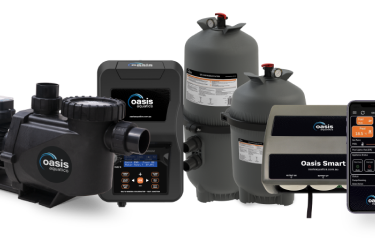
Chlorine is susceptible to degradation when exposed to sunlight. To mitigate this, stabiliser (cyanuric acid) is added to pool water to protect chlorine from UV breakdown while maintaining its effectiveness during daylight hours. Recommended stabiliser levels typically range between 30 and 70 ppm, depending on the type of chlorine used. However, if your pool equipment includes an Oasis SmartChem or another chemistry management system that utilises an ORP (Oxidation Reduction Potential) sensor, stabiliser levels must be kept below 15 ppm. Elevated stabiliser concentrations can interfere with ORP sensor accuracy, resulting in unstable or misleading readings.
Effective filtration, in conjunction with proper water balance and sanitation, ensures clean and healthy water. All water contains microscopic algae spores and organisms that can proliferate rapidly without treatment and removal. The three common filter processes for swimming pools are sand, cartridge, and diatomaceous earth (DE). Filters should be run for a minimum of two passes of the total pool volume per day (eight to twelve hours) to effectively remove solids and maintain water clarity.
Contact Sunlover Heating TODAY to Extend your Swimming Season!